


Taste of Japan
What to Eat in Japan – Top 50 Foods
Japanese cuisine emphasizes seasonality, precise technique, umami from dashi and soy, and a balance of textures and flavors. Seafood, rice, noodles, and fermented ingredients dominate, with strong regional variations from Tokyo’s refined styles to Osaka’s street food and Hokkaido’s dairy and seafood.

Classics & Everyday
Sushi – Vinegared rice topped or rolled with fresh fish, shellfish, or vegetables. From simple nigiri to elaborate rolls; best experienced at a counter or kaiten (conveyor) shop.

Sushi Sashimi – Thinly sliced raw fish or seafood served with soy sauce and wasabi. Quality and freshness are everything.
Ramen – Noodle soup in regional broths (tonkotsu pork bone, shoyu soy, miso, or clear shio). Toppings range from chashu pork to soft-boiled eggs.

Ramen Tempura – Seafood and vegetables in a light, airy batter, deep-fried and served immediately.

Tempura Tonkatsu – Breaded, deep-fried pork cutlet, usually served with shredded cabbage and sauce.
Udon – Thick, chewy wheat noodles in a mild dashi broth or cold with dipping sauce.
Soba – Thin buckwheat noodles, eaten hot in soup or cold with a soy-based dipping sauce.
Miso Soup – Everyday soup of miso paste, dashi, tofu, and seaweed or vegetables.
Onigiri – Rice balls filled with salmon, tuna, plum, or other fillings and often wrapped in nori. A convenience-store staple.
Japanese Curry – Mild, thick curry over rice, often with a breaded cutlet (katsu curry).

Japanese Curry
Street Food & Casual
Takoyaki – Osaka’s signature octopus balls: crispy outside, soft inside, topped with sauce, mayo, and bonito flakes.
Yakitori – Grilled chicken skewers (various cuts) seasoned with salt or sweet soy tare.
Okonomiyaki – Savory cabbage pancake (Osaka or Hiroshima style) cooked on a griddle and topped with sauce, mayo, and bonito.
Karaage – Japanese fried chicken, marinated and crispy.
Gyoza – Pan-fried pork dumplings.
Yakisoba – Stir-fried noodles with vegetables and a savory sauce.
Kushikatsu – Deep-fried skewers of meat, seafood, or vegetables (Osaka specialty).
Menchi Katsu – Juicy ground-meat cutlet, breaded and fried.
Korokke – Potato croquettes, a common snack.
Mains, Hot Pots & Regional
Sukiyaki – Sweet-savory hot pot of thinly sliced beef, vegetables, and tofu cooked tableside.
Shabu-shabu – Thinly sliced meat and vegetables swished in hot broth and dipped in sauces.

Shabu-shabu Donburi – Rice bowls topped with ingredients such as beef (gyudon), pork cutlet (katsudon), or seafood (kaisendon).
Yakiniku – Table-grilled meats, often with a variety of cuts.
Oden – Simmered fish cakes, daikon, eggs, and other ingredients in a light broth.
Natto – Fermented soybeans with a sticky texture and strong flavor, usually eaten with rice.
Tamagoyaki – Sweet, layered Japanese omelet.

Tamagoyaki Chawanmushi – Savory steamed egg custard.
Fugu – Pufferfish, carefully prepared (often as sashimi) in licensed restaurants.
Regional specialties – Examples include Hokkaido seafood, Hiroshima-style okonomiyaki, and Kyoto’s refined kaiseki dishes.
Additional Favorites
Soba or udon variations (hot or cold).
Seafood rice bowls.
Izakaya small plates (grilled items, pickles, tofu).
Convenience-store snacks and bento.
Fancy and seasonal fruit.

Fancy and seasonal fruit at a Japanese fruit shop Green tea (sencha, matcha).
Pickled vegetables.
Tofu dishes.
Festival foods (yakisoba, taiyaki, grilled items).

Tanghulu Kaiseki multi-course meals for a formal experience.
Desserts & Sweets
Mochi – Chewy pounded rice, often filled (daifuku) or served in other forms.
Dorayaki – Two small pancakes sandwiching red bean paste.
Taiyaki – Fish-shaped cake filled with red bean paste, custard, or chocolate.
Wagashi – Traditional Japanese sweets, often paired with tea.

Wagashi Kakigori – Shaved ice with syrup, fruit, or matcha.
Matcha desserts – Green tea ice cream, cakes, and sweets.
Dango – Chewy rice dumplings on a skewer.
Purin – Japanese custard pudding with caramel.
Castella – Soft sponge cake (Nagasaki specialty).
Melon pan – Sweet bread with a cookie-like crust.
Japanese cheesecake, fluffy pancakes, or Harajuku crepes.
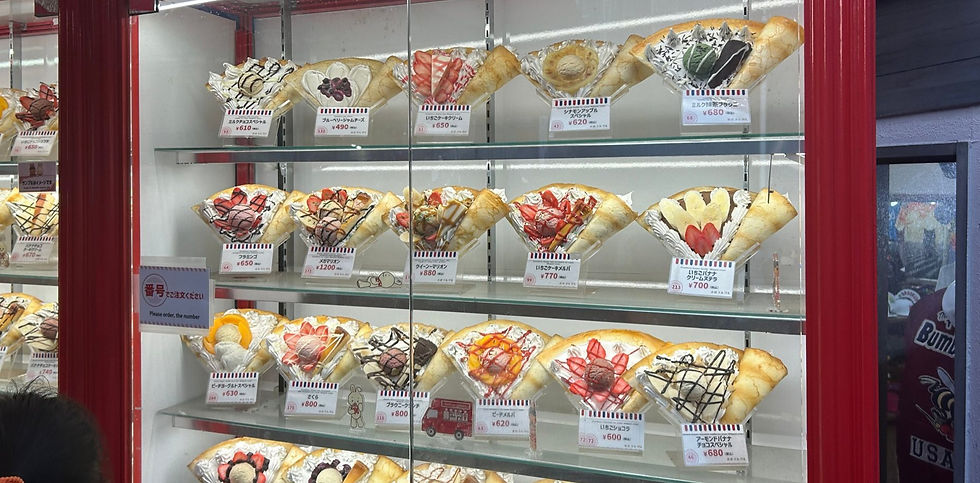
Harajuku crepes
Notes: Regional differences are significant—Osaka leans toward street food and fried items, Tokyo offers both refined and casual options, and Hokkaido is known for seafood and dairy. Convenience stores are excellent for everyday items like onigiri and snacks.


Comments