


Taste of North Africa
Updated: 14 hours ago
What to Eat in North Africa – Top 50 Foods
North African cuisine (Morocco, Algeria, Tunisia, Libya, and Egypt) blends Berber, Arab, Mediterranean, and Ottoman influences. Staples include couscous, slow-cooked tagines, flatbreads, legumes, olive oil, and bold spices (cumin, coriander, cinnamon, saffron, harissa). Sweet-savory combinations are common.

Morocco
Tagine – Slow-simmered in a cone-lidded clay pot until meltingly tender – think golden chicken with salty preserved lemon and green olives, or lamb with sticky prunes, toasted almonds and a whisper of cinnamon.

Couscous – Fluffy, hand-rolled semolina steamed over a fragrant broth and crowned with tender meat and soft-cooked vegetables – the centerpiece of the Friday family lunch.

Pastilla (B’stilla) – A showstopping sweet-and-savory pie: crackly layers of warqa pastry wrapped around spiced shredded chicken (or pigeon), egg and toasted almonds, dusted with powdered sugar and cinnamon.
Harira – A hearty, velvety soup of tomato, lentils and chickpeas, perfumed with fresh coriander and ginger – the dish that breaks the fast every evening of Ramadan.

Tanjia – Marrakech’s bachelor’s stew: lamb sealed in a tall clay urn with cumin, saffron and preserved lemon, then slow-cooked for hours in the ashes of a hammam furnace.
Mechoui – Whole lamb rubbed with cumin and butter and roasted over embers until the skin crackles and the meat pulls apart – eaten by hand with a pinch of salt and cumin.
Msemen – Square, flaky pan-fried flatbread folded in buttery layers, best torn warm and drizzled with honey alongside a glass of mint tea.
Zaalouk – A smoky, silky salad of charred eggplant mashed with tomatoes, garlic, paprika and olive oil, scooped up with fresh bread.
Bissara – A thick, comforting fava bean purée swirled with olive oil and sprinkled with cumin and paprika – a cheap and cheerful winter breakfast.
Merguez – Slender, brick-red lamb sausages fired up with harissa, cumin and fennel, sizzled on the grill and tucked into bread.
Algeria
Couscous – Algeria’s pride, served with a rich red tomato sauce or a white broth, piled with lamb, chickpeas and tender vegetables.

Couscous with vegetables and herbs Chorba Frik – A deeply savory soup of cracked green wheat, lamb, tomato and fresh mint – the bowl that opens every Ramadan meal.
Mahjouba – Paper-thin semolina crêpes folded around a jammy, spiced tomato-and-onion filling and crisped on the griddle – a beloved street snack.
Rechta – Delicate hand-cut noodles bathed in a cinnamon-scented white broth with chicken, chickpeas and turnips, often made for celebrations.
Karantika – A custardy chickpea-flour flan baked until golden on top, sprinkled with cumin and harissa and eaten in a baguette from street carts.
Loubia – Creamy white beans simmered in a garlicky tomato sauce with paprika and cumin, mopped up with crusty bread.

Kesra – A rustic round semolina bread enriched with olive oil, crisp on the outside and soft within, baked fresh daily.
Makroud – Diamond-shaped semolina pastries stuffed with date paste, fried or baked, then dipped in honey or orange-blossom syrup.
Tajine – Gently spiced stews of meat, olives, prunes or vegetables – sweeter and saucier than their Moroccan cousins.

Bourek – Crisp, golden pastry rolls filled with spiced minced meat, onion and parsley, a must on the Ramadan table.
Tunisia
Couscous – Tunisian couscous with a kick: steamed semolina under a fiery harissa-red sauce, often with grouper or other fresh fish from the coast.
Brik – Shatteringly thin, half-moon pastry wrapped around a runny egg, tuna, capers and parsley, fried until crisp – eat it carefully!
Lablabi – A soul-warming bowl of chickpeas in garlicky cumin broth poured over torn stale bread, topped with harissa, olive oil, capers and a soft egg.
Mechouia – Charred peppers, tomatoes and onions chopped into a smoky salad, dressed with olive oil and garnished with tuna, olives and egg.
Harissa – Tunisia’s signature fiery red paste of dried chilies, garlic, caraway and coriander – stirred into nearly everything.
Bambalouni – Fluffy, golden fried doughnuts dusted with sugar, sold piping hot in seaside towns like Sidi Bou Said.
Makroudh – Semolina pastries filled with sweet date paste and soaked in honey syrup, a speciality of the holy city of Kairouan.
Seafood dishes – Grilled sea bream, octopus and calamari fresh from the Mediterranean, served with lemon, olive oil and harissa.

Fricassée – A small fried sandwich roll split and stuffed with tuna, egg, potato, olives and harissa – irresistible street food.
Egypt
Koshari – Egypt’s carb-loaded national dish: rice, lentils, macaroni and chickpeas layered with tangy tomato-vinegar sauce, garlicky dressing and crispy fried onions.
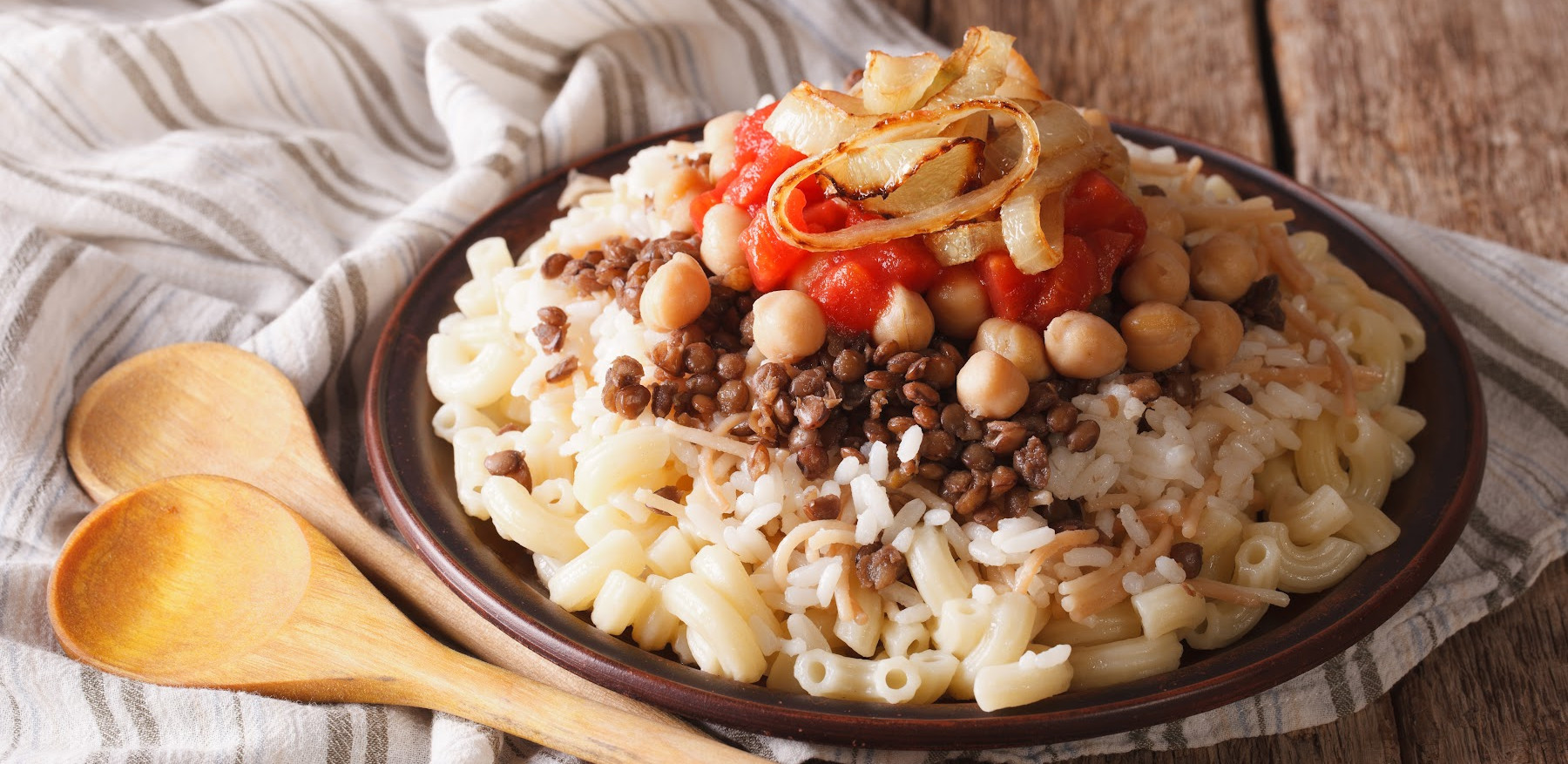
Koshari – rice, pasta, lentils and chickpeas with spicy tomato sauce Ful Medames – Fava beans slow-cooked overnight until creamy, then mashed with cumin, lemon, garlic and olive oil – Egypt’s classic breakfast.
Meze – A spread of small plates – crisp ta’ameya (fava-bean falafel), hummus, baba ghanoush, tahini, pickles and chopped salads – scooped up with warm baladi bread.

Egyptian mezze spread – falafel (ta’ameya), tabbouleh, hummus and pita Ta’ameya – Egyptian falafel made with green fava beans and herbs, giving a bright green, fluffy center under a crisp sesame-flecked crust.
Molokhia – A silky, emerald-green stew of finely chopped jute leaves cooked in broth with garlic and coriander, served with rice or bread.
Shawarma – Thin slices of marinated beef or chicken carved from a rotating spit and wrapped with tahini, pickles and onions.

Shawarma wraps with tomatoes and fries Fatta – A festive layering of crisp bread and rice soaked in broth, topped with tender lamb and a garlic-vinegar tomato sauce, served at Eid.
Hawawshi – Pita bread stuffed with spiced minced meat, onions and chili, then baked until crunchy and juicy inside.
Macarona Bechamel – Egypt’s answer to lasagne: penne baked with spiced minced beef under a thick, golden blanket of béchamel.
Mulukhiyah – Leafy greens such as jute and chard, cooked into comforting garlicky stews served across the region.
Shared & Other
Shakshuka & Ojja – Eggs poached in a bubbling, cumin-spiced tomato and pepper sauce, eaten across the region; Tunisia’s ojja adds harissa and often merguez.

Tunisian ojja – eggs in harissa-spiced tomato and pepper sauce Flatbreads – From flaky msemen and round khobz to thin Tunisian tabouna, fresh bread is the edible spoon of every meal.
Dates and dried fruits – Glossy Medjool and Deglet Nour dates, figs and apricots, served with milk to break the fast and offered to every guest.
Mint tea – Green tea brewed with fistfuls of fresh mint and plenty of sugar, poured high from a silver teapot – the region’s symbol of hospitality.
Preserved lemons – Lemons cured in salt and their own juice until soft and fragrant, adding a bright, tangy punch to tagines and salads.
Grilled meats and kebabs – Smoky skewers of lamb, beef kefta and chicken grilled over charcoal and served with bread, onions and cumin.
Salads and mezze-style small dishes – Colorful small plates of cooked and raw salads – carrots with cumin, roasted peppers, beets and eggplant – shared at the start of a meal.

Desserts
Basbousa – Syrup-soaked Egyptian semolina cake, often topped with almonds.
Kunafa – Shredded kataifi pastry baked with cream or cheese and drenched in syrup.
Umm Ali – Egypt’s warm bread pudding of flaky pastry, milk, nuts and raisins.
Chebakia – Moroccan sesame cookies folded into flowers, fried and dipped in honey – a Ramadan favorite.

Moroccan sweets with mint tea – chebakia, ghriba and almond cookies


Comments